


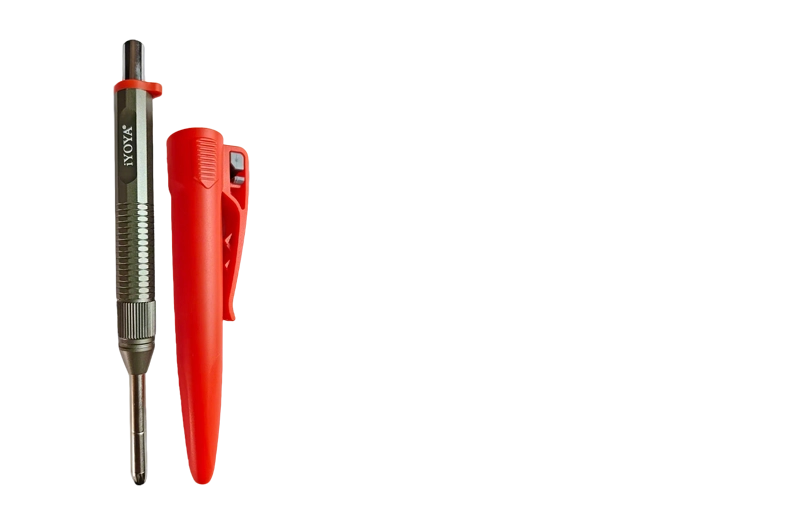



What tool can reach into holes several centimeters deep for marking during renovation?

Anyone who has done renovation knows one of the most annoying things is marking inside deep holes.
You’re installing hardware, and the screw hole is at the back of a cabinet – an ordinary pencil simply can’t reach. You need to mark a drill point on tile, but the marker tip is too short to touch the surface. You’re doing woodworking, and the mortise is deep and narrow – a carpenter’s pencil gets stuck outside. In the end, you close your eyes and guess by feel – and the guess is always off, which means rework, wasted time and materials – incredibly frustrating.
But the truth is, there have long been specialized tools to solve this “marking in deep holes” problem. Today I’ll introduce a few tools that can genuinely reach into holes and make marks.
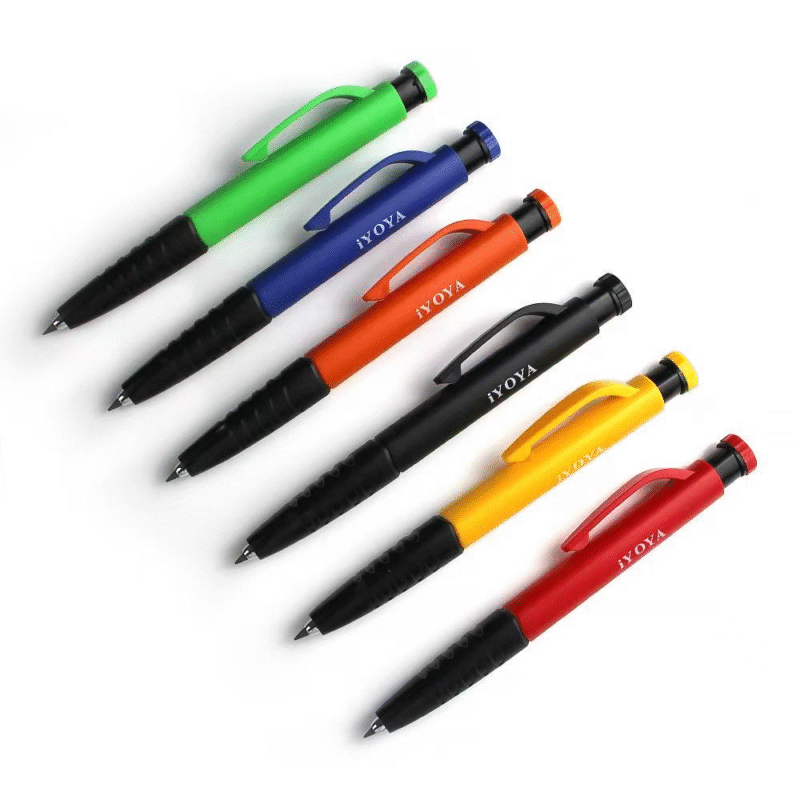
1. Deep-Hole Carpenter’s Pencil – Made specifically for woodworkers
Let’s start with the most professional option – the deep-hole carpenter’s pencil.
This pencil looks completely different from a regular one. A regular pencil has a thick body and a short tip; this one is the opposite: the tip is thin and long, made of metal, and can easily reach several centimeters into a hole.
What makes it good? Three things:
First, it really does reach deep. The metal tip is like a thin tube, much thinner than a regular pencil, so it fits into screw holes, mortises, and narrow slots.
Second, you can see what you’re doing. The slim body doesn’t block your view when inserted into a hole – you can clearly see where the point is touching.
Third, it marks accurately. The lead touches the bottom of the hole directly – you point and mark, no more guessing by feel.
Many carpenters have the same reaction when they first use this tool: “If I’d known about this earlier, I’d have saved so much rework!” Indeed, for tasks like mortise positioning and groove layout, this pencil marks accurately the first time, eliminating repeated adjustments.
Its lead is 2.8mm thick – much thicker than standard pencil lead – so it doesn’t break easily even with firm pressure on wood. Most models are refillable, so one pen body can be reused for years, which works out more economical than buying ordinary pencils in the long run.
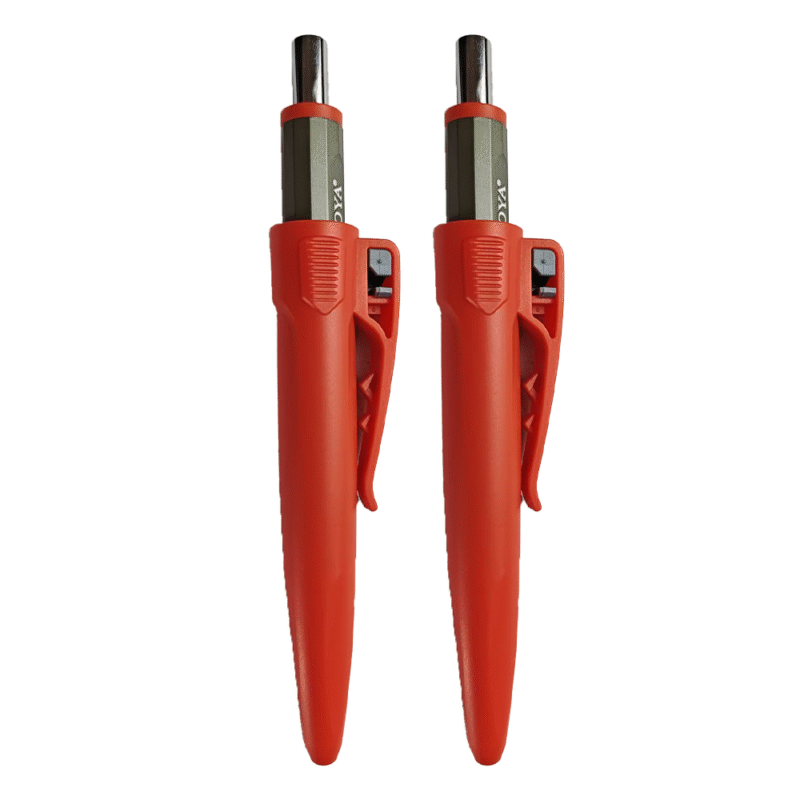
On the market, brands like iYOYA offer the ST-100, which weighs only 20g – lighter than a fountain pen – and you can just slip it into your pocket and head to the job site. The ST-700 has a full metal body, comes with a built-in sharpener and a scale ruler – ideal for detail-oriented professionals.
2. Long-Tip Marker Pen – Works on tile and metal too
If you need to mark on smooth or damp surfaces like tile, metal, or pipes, the deep-hole carpenter’s pencil won’t do – graphite doesn’t adhere to glossy surfaces and wipes off easily.
In that case, you can use a long-tip marker pen.
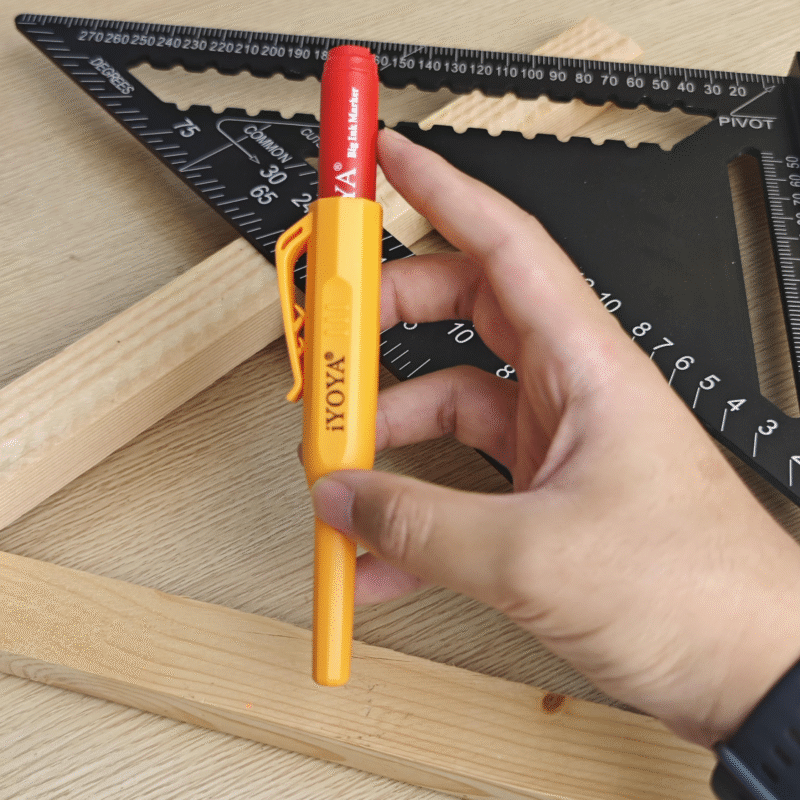
Its selling point is the extended tip, typically 15 to 20mm long, which can reach into tile drill holes, pipe gaps, and ceiling joist cavities. It uses oil-based ink that is waterproof and grease-resistant – it dries quickly on tile, metal, and plastic, and won’t rub off.
Anyone who’s done renovations knows that before drilling in a bathroom, you need to mark positions on tile. A regular water-based marker smears into a blur when exposed to moisture, but the long-tip marker doesn’t have that problem. It dries within seconds, and even after cement dust covers it, the mark remains clearly visible.
For example, iYOYA’s marker has an extended tip that can be replaced with different thicknesses, and it’s refillable – you just add more ink when it runs out, instead of throwing away the whole pen, which saves money compared to disposables.
3. Professional Deep-Hole Marking Tool:
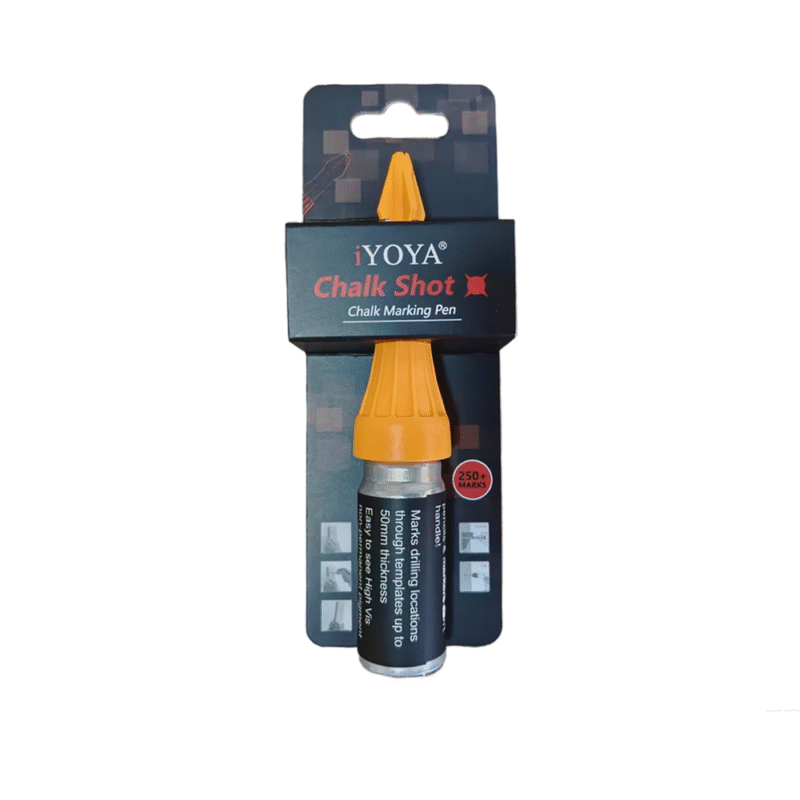
If you’re more particular, or if you need to work on a variety of materials, you can consider iYOYA’s marking spray bottle.
This is a professional-grade product – its aluminum body can spray from a distance of 50mm, making it one of the longest-reach marking tools on the market. Its powder-based coloring is highly adherent, allowing you to spray a precise mark on a single point, with bright colors that are easy to wipe off.
4. Which one should you choose?
If you do woodworking and need to draw lines on wood, choose the deep-hole carpenter’s pencil. Its thin, long tip and thick lead won’t break under pressure, and it marks accurately inside deep holes.
If you need to position marks on tile or metal, choose the long-tip marker pen. Its oil-based ink is waterproof and slip-resistant, won’t rub off, and works on both tile and metal.
If you want a tool that adapts to multiple environments and work sites, choose the professional spray bottle. With its 50mm ultra-long reach, it can mark any material – and it looks impressively professional.
Final summary:
Stop forcing ordinary pencils into deep holes. Tools are meant to make your work easier, not to make you suffer.
Marking in deep holes really isn’t worth “guessing” your way through. Spend a few bucks on the right pen – you’ll work twice as fast, with far less rework. This deal is never a loss.