


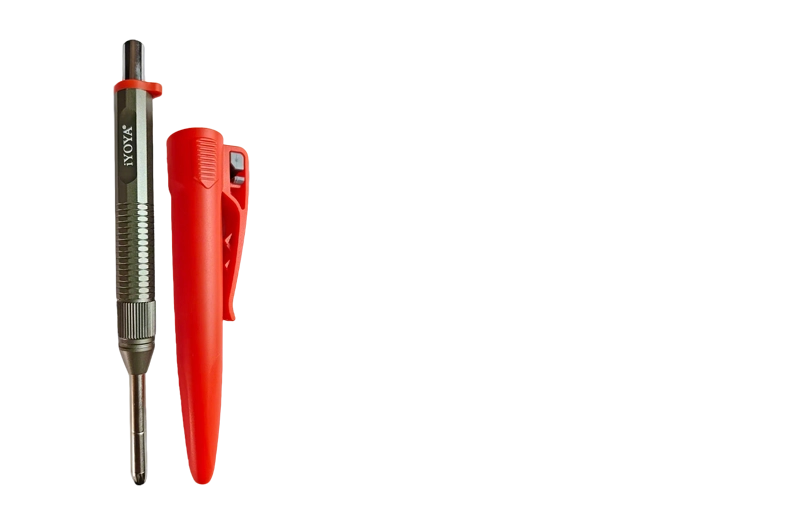



Deep Hole Pencil for Cabinet Making: Why Cabinet Makers Need One

Cabinet making is a trade of precision. Every hinge plate, drawer slide, and shelf pin depends on accurate layout marks — and many of those marks need to be made in spaces where a regular pencil simply cannot reach. If you have ever tried to mark the inside back of a cabinet carcass, the bottom of a hinge mortise, or the alignment point inside a drawer box with a standard carpenter pencil, you already know the problem. A deep hole pencil for cabinet making solves exactly these kinds of marking challenges.
This guide breaks down the specific ways cabinet makers and installers use deep hole pencils on the job, with practical scenarios and tips you can apply in your own shop or on the next install.
Why Cabinet Making Demands More Than a Regular Pencil
A standard carpenter pencil works fine for marking cut lines on flat plywood and sheet goods. But cabinet work involves a lot more than marking flat panels. Once you start assembling carcasses, installing hardware, and fitting cabinets on site, you encounter marking situations that a flat pencil was never designed for:
- Marking the inside walls and backs of assembled cabinet boxes where your hand cannot fit
- Transferring layout marks into hinge mortises and cup recesses
- Aligning drawer slides inside narrow drawer openings
- Marking trim and reveal lines inside face frame openings
- Locating screw holes inside toe kick spaces and base recesses
- Scribing and fitting cabinets against uneven walls on site
In each of these situations, the problem is the same: the marking surface is recessed, enclosed, or at the bottom of a cavity, and a regular pencil body hits the edge before the lead touches the target. A deep hole pencil — with its extended, mechanically advanced tip — reaches past those obstacles and puts the mark exactly where it needs to be.
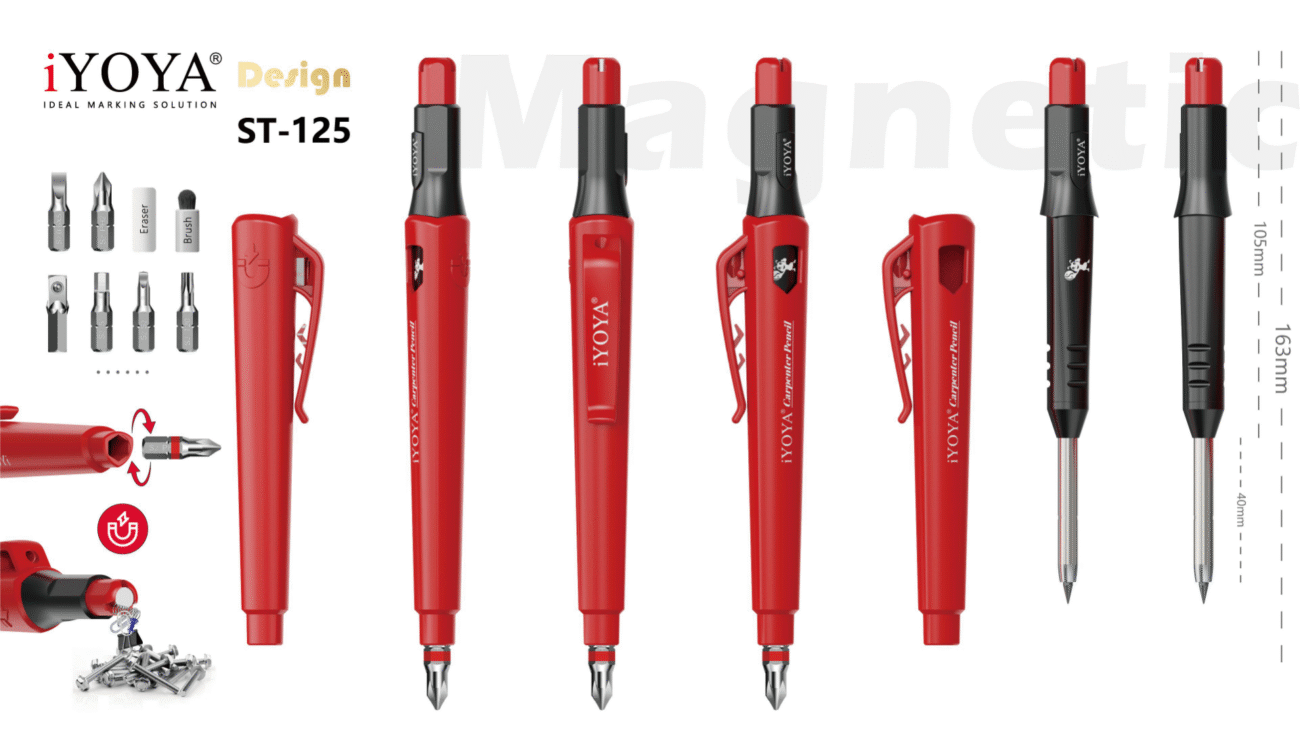
7 Ways Cabinet Makers Use a Deep Hole Pencil
- Marking Inside Cabinet Carcasses
Once a cabinet carcass is assembled, the inside back panel and side walls become difficult to mark. You may need to locate shelf pin holes, mark stretcher positions, or transfer measurements from the front to the back of the box. A regular pencil can reach a few inches inside, but for deeper cabinets — pantry units, tall oven cabinets, deep base cabinets — the pencil body bottoms out before the lead reaches the back panel.
A deep hole pencil extends several inches beyond the body, allowing you to mark the inside back of even deep cabinet carcasses without disassembling anything. This is especially useful when you discover a fitting issue during assembly and need to make a quick layout correction inside the box.
- Hinge Mortise and Cup Hole Layout
European hinge installation requires precise marking for both the cup hole on the door and the mounting plate on the cabinet face frame or side. The cup hole is a shallow recess, but the mounting plate screws often go into positions that are hard to reach once the door is test-fit. A deep hole pencil lets you mark screw positions through the hinge plate holes while the hinge is held in place — even when the plate is recessed inside a face frame opening.
For overlay and inset hinge adjustments, being able to mark directly on the cabinet side inside the opening — rather than measuring and transferring from the front — saves time and reduces error. Every cabinet maker knows that a misaligned hinge plate means re-drilling, and re-drilling means visible screw holes that are difficult to hide.
- Drawer Box and Drawer Slide Alignment
Drawer slide installation is one of the most marking-intensive tasks in cabinet making. Side-mount and under-mount slides both require precise alignment marks inside the cabinet opening. With the cabinet carcass assembled, reaching the back of the drawer opening to mark slide screw positions can be awkward — especially on deep drawers.
A deep hole pencil reaches to the back of the drawer opening, allowing you to mark front and rear slide screw positions from inside the cabinet. You can also use it to mark the drawer box itself — locating drawer front screw positions from the inside, or marking reveal lines on the drawer sides before fitting the front.
For frameless cabinets with full-extension slides, the rear slide mounting bracket is often at the very back of a deep cabinet. Marking those bracket positions with a regular pencil requires either a long reach with your whole arm inside the box, or disassembly. A deep hole pencil reaches the back of the cabinet while your hand stays at the front opening.
- Face Frame and Trim Installation
Face frame installation involves marking stile and rail positions on the cabinet carcass, then transferring those marks to the face frame parts. Once the face frame is attached, you may need to mark inside the frame opening for hinge plates, catches, or door stops. The frame opening creates a recessed space where a wide pencil body cannot enter cleanly.
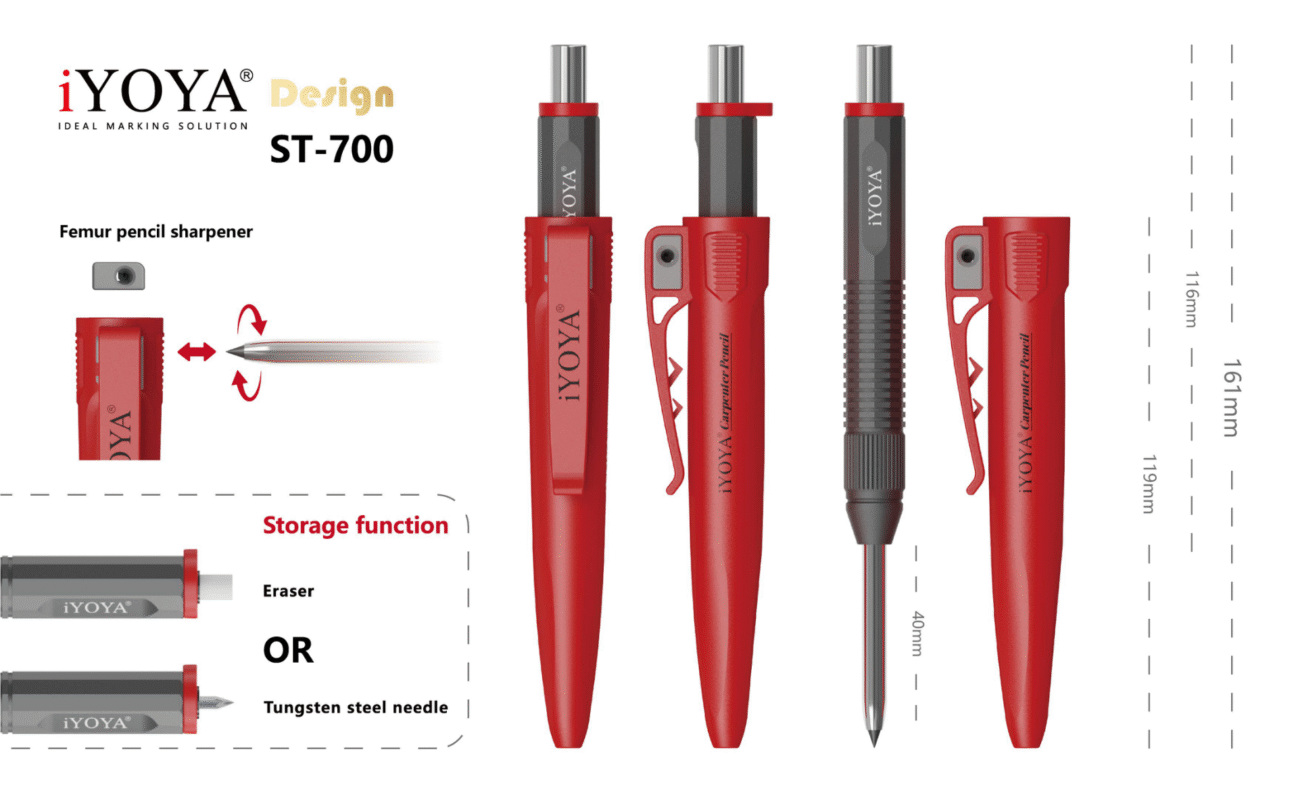
A deep hole pencil’s slim body fits inside face frame openings, and its extended tip reaches the cabinet side behind the frame. This makes it easy to mark hinge plate screw positions, magnetic catch locations, and door stop blocks without removing the face frame.
Trim work around cabinets — crown molding, light rails, base shoe — also involves marking in tight spaces. Scribing crown to a ceiling or marking a light rail return often requires a mark in a narrow gap. The deep hole pencil’s slim profile and long tip make these marks possible where a regular pencil would just smudge or miss the target.
- Toe Kick and Base Marking
Toe kick spaces are notoriously awkward to work in. The recessed toe kick area at the bottom of base cabinets is deep, low, and hard to see into. Marking toe kick clip positions, notch locations for pipes or electrical, or the toe kick board itself requires reaching into a space that is too low and too deep for comfortable access.
A deep hole pencil lets you reach into the toe kick recess from the front, marking clip positions and notch locations without kneeling down and reaching your arm inside the cabinet base. For kitchen remodels where existing plumbing or electrical penetrates the toe kick area, being able to mark notch positions accurately means a cleaner fit and fewer callbacks.
- Shelf Pin and Hardware Hole Layout
Shelf pin holes are usually drilled with a jig before assembly, but adjustments and modifications are often needed after the cabinet is built. If a shelf pin hole is misdrilled or you need to add an extra shelf position, marking the new hole location inside the assembled cabinet requires reaching the side panel at the desired height.
A deep hole pencil reaches inside the cabinet to mark new shelf pin positions on the side panels, even at the back of deep cabinets. The same applies to other hardware — closet rods, hooks, magnetic latches, and wire management clips that need to be mounted inside cabinet interiors.
- On-Site Installation and Fitting
Shop work is controlled and predictable. On-site cabinet installation is anything but. Walls are not perfectly flat, floors are not perfectly level, and corners are not perfectly square. Every installation involves scribing, fitting, and marking adjustments in spaces that were never designed for easy access.
A deep hole pencil is invaluable on the install truck. Use it to mark filler strip reveals inside corner cabinets, scribe end panels to uneven walls, mark base trim inside toe kick spaces, and locate screw positions for decorative hardware inside installed cabinets. When you are working inside a customer’s kitchen with limited space and time, having a pencil that can reach into awkward spaces means fewer return trips and cleaner installations.
Real-World Cabinet Making Scenarios
Scenario: The pantry cabinet hinge problem. You install a 24-inch deep pantry cabinet and discover that the hinge mounting plate on the back side of the face frame is slightly misaligned. The door will not close flush. With a regular pencil, you cannot reach inside the face frame opening to mark the corrected plate position without removing the door and measuring from the front. With a deep hole pencil, you reach inside the opening, mark the corrected screw positions through the hinge plate, and re-drill in minutes.
Scenario: The deep drawer slide retrofit. A customer wants to upgrade existing cabinets to full-extension drawer slides. The cabinets are 22 inches deep, and the rear slide brackets need to be mounted to the cabinet back. You cannot reach the back of the cabinet with a regular pencil to mark the bracket positions. A deep hole pencil reaches the back panel, marks the bracket screw holes, and the installation proceeds without removing the cabinet from the wall.
Scenario: The on-site corner cabinet scribe. A lazy Susan corner cabinet needs an end panel scribed to a wall that bows out by 3/8 inch. You need to mark the scribe line on the back side of the end panel while it is held in position inside the corner cabinet opening. The space is too tight for your hand and a regular pencil. A deep hole pencil fits in the gap, marks the scribe line, and you trim the panel to a perfect fit.
Tips for Using a Deep Hole Pencil in Cabinet Work
- Match the lead color to the material. Graphite lead works on light maple and birch. Use yellow or white lead on dark walnut, stained interiors, or melamine surfaces where graphite marks are hard to see.
- Extend only what you need. For shallow hinge mortises, a short extension is enough and more stable. For deep cabinet carcasses, extend further. More extension means more vulnerability to breakage.
- Keep a spare in the install truck. Deep hole pencils are compact and easy to misplace on a job site. Keep one in your apron and a backup in the truck.
- Use it for layout, not for rough marking. A deep hole pencil is a precision tool. Keep a regular carpenter pencil for rough cut marks on sheet goods, and save the deep hole pencil for the precision layout work where it earns its keep.
- Carry replacement leads. Nothing stops a job faster than a broken lead with no replacement. Keep a tube of leads in your apron or tool belt.
- Retract the lead between uses. The extended lead is the most vulnerable part of the tool. Retract it when you set the pencil down or put it back in your pocket.
iYOYA Deep Hole Pencils for Cabinet Makers
iYOYA designs deep hole woodworking pencils with the specific needs of professional trades in mind — including cabinet makers and installers who work in tight, recessed spaces every day. The extended tip design reaches inside cabinet carcasses, hinge mortises, drawer openings, and toe kick spaces where regular pencils cannot go.
For cabinet shops and installation crews, iYOYA offers:
- Extended tip for reaching deep inside cabinet boxes and recessed hardware locations
- Mechanical lead advancement — no sharpening, one-handed operation on the job site
- Durable lead that resists breaking when extended for deep reach marking
- Slim body profile that fits inside face frame openings and narrow gaps
- Replacement leads available for shop and crew use
- Wholesale and OEM options for cabinet supply distributors and tool resellers
If you want to understand the basics of how these tools work, read our guide on what is a deep hole woodworking pencil. For general hard-to-reach marking techniques, see how to mark hard-to-reach wood areas. And if you are comparing tool options, our deep hole pencil vs traditional carpenter pencil breakdown covers the key differences.
Cabinet shops and installers interested in wholesale pricing or crew quantities can contact iYOYA for more information.
FAQ
Q: Do I really need a deep hole pencil for cabinet making? A: If you build or install cabinets with any regularity, yes. The combination of enclosed carcasses, recessed hardware locations, and on-site fitting challenges means you will encounter marking situations that a regular pencil cannot handle. Many cabinet makers initially see it as a niche tool, then wonder how they worked without it after the first week.
Q: Can a deep hole pencil mark inside a 24-inch deep cabinet? A: The reach depends on the specific pencil model and its maximum lead extension. Quality deep hole pencils are designed to reach well into standard cabinet depths. For very deep pantry or wardrobe cabinets, you may still need to reach in with your arm, but the deep hole pencil extends your reach significantly beyond what a regular pencil offers.
Q: Is a deep hole pencil better than a regular pencil for hinge installation? A: For marking through hinge plates and inside face frame openings, yes. The slim body and extended tip reach positions that a wide flat carpenter pencil cannot access. For marking hinge cup positions on flat door panels, a regular pencil or marking knife works fine.
Q: What lead color is best for cabinet interiors? A: It depends on the interior finish. Graphite works on light, unfinished plywood interiors. Yellow or white lead shows up much better on dark stained interiors, melamine, or pre-finished cabinet interiors where graphite can be difficult to see against the surface.
Q: Can I use a deep hole pencil for marking cut lines on plywood? A: You can, but a deep hole pencil is a precision tool designed for recessed marking. For rough cut lines on sheet goods, a standard carpenter pencil or marking knife is more appropriate. Save the deep hole pencil for the precision layout and installation work where its extended tip is essential.
Conclusion
Cabinet making is a trade defined by precision in tight spaces. From hinge mortises to drawer slide alignment, from toe kick notches to on-site scribing, the marks that determine the quality of the finished job are often made in places where a regular pencil cannot reach. A deep hole pencil for cabinet making is not a luxury — it is a practical solution to a problem that every cabinet maker encounters.
Whether you are building custom cabinets in the shop or installing them in a customer’s kitchen, having a pencil that can reach into carcasses, mortises, openings, and recesses means fewer measurement errors, less rework, and cleaner installations. It is one of those tools that earns its place in your apron after the first job.
Explore iYOYA deep hole woodworking pencils for cabinet making and installation, or contact us for wholesale and crew pricing.