





What Is a Deep Hole Woodworking Pencil? A Complete Guide

If you spend time around carpenters, furniture makers, or woodworking forums, you may have heard the term “deep hole woodworking pencil” — or seen a pencil with an unusually long, thin tip being used to mark inside drilled holes and recessed joints. But what is a deep hole woodworking pencil, exactly? How does it differ from a regular carpenter pencil? And is it something you need in your toolbox?
This guide answers all of those questions. We will break down the definition, design, working principle, real-world uses, and benefits of deep hole woodworking pencils, so you can decide whether this specialized marking tool belongs in your workshop.
Definition: What Exactly Is a Deep Hole Woodworking Pencil?
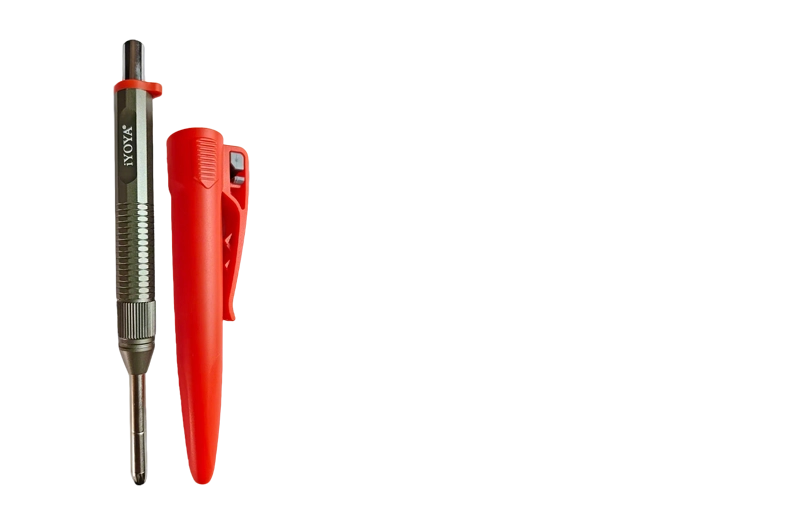
A deep hole woodworking pencil — also called a deep hole carpenter pencil, deep hole marking pencil, or long-tip woodworking pencil — is a specialized marking tool designed to leave visible marks inside deep drilled holes, recessed mortises, narrow grooves, and other hard-to-reach areas that a standard pencil cannot reach.
The defining feature is its extended, slender tip. Unlike a traditional carpenter pencil where the lead sits close to the body, a deep hole pencil uses a mechanical advancement system that pushes the lead far beyond the pencil body. This allows the tip to penetrate deep into cavities and recesses, making direct contact with surfaces that would otherwise be impossible to mark without disassembling the workpiece.
Deep hole woodworking pencils are not a gimmick. They solve a real problem that carpenters and furniture makers encounter daily: transferring accurate layout marks into spaces where your hand — and a regular pencil — simply cannot fit.
How Is It Different from a Regular Carpenter Pencil?
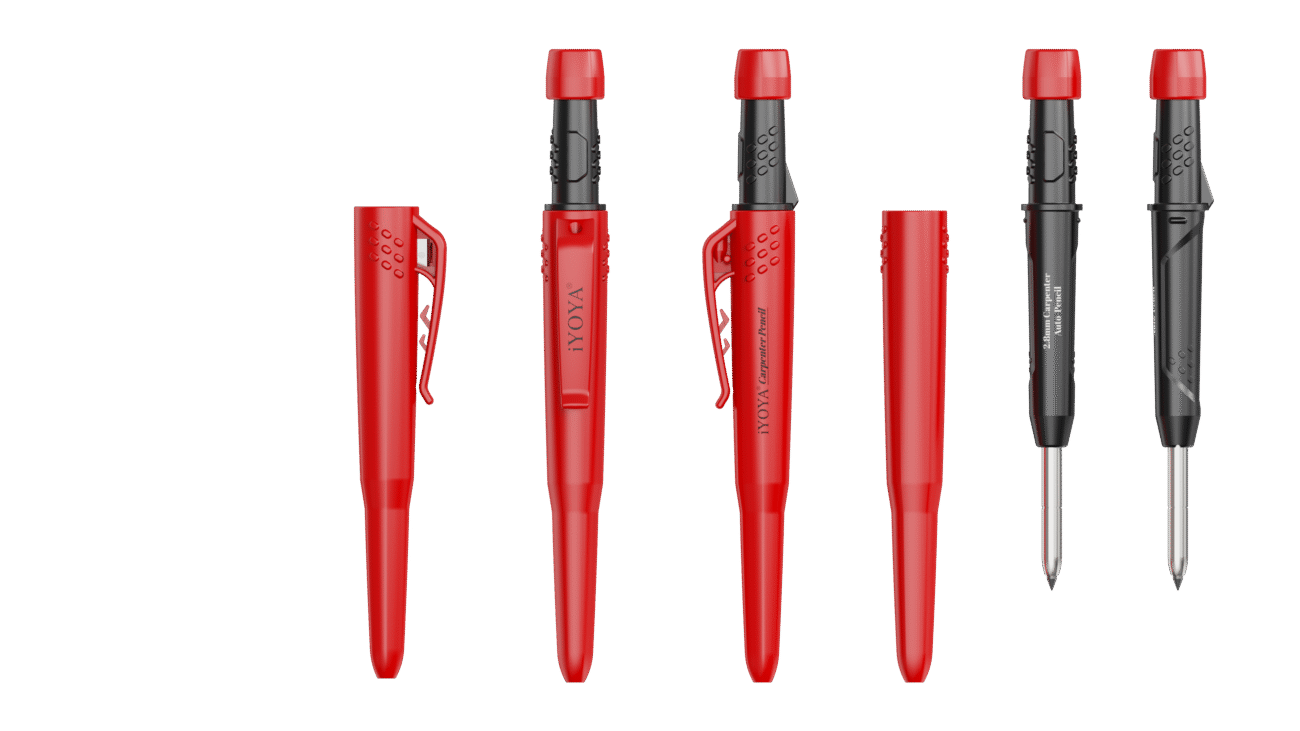
At first glance, a deep hole pencil may look similar to a standard mechanical carpenter pencil. The differences become clear when you extend the tip and compare the two side by side:
Tip length. A regular carpenter pencil exposes only a short length of lead just beyond the wood or plastic body. A deep hole woodworking pencil features a long extended tip that reaches deep into holes and recesses.
Marking reach. Regular carpenter pencils are limited to flat, open surfaces. Deep hole pencils can mark inside deep holes, mortises, grooves, tight gaps, and recessed joints.
Lead advancement. Traditional carpenter pencils require manual sharpening with a knife or sharpener. Deep hole pencils use a mechanical push-button or twist advancement system.
Lead type. Standard carpenter pencils use a thick, flat graphite lead. Deep hole pencils use a thin cylindrical graphite lead formulated specifically for stability when the tip is fully extended.
Body shape. A regular carpenter pencil has a wide, flat wooden body. A deep hole pencil has a slim cylindrical or hexagonal body that fits into narrow spaces.
Sharpening. Traditional carpenter pencils need frequent sharpening. Deep hole pencils require no sharpening — you simply advance the lead as it wears down.
Best use case. Regular carpenter pencils are ideal for rough framing and general layout on flat lumber. Deep hole woodworking pencils excel at fine woodworking, cabinetry, furniture joinery, and precision layout.
The most important difference is not the shape or the lead type — it is the marking reach. A regular carpenter pencil is designed for surfaces you can see and touch directly. A deep hole pencil is designed for surfaces you cannot reach with your hand.
Key Design Features and How They Work
A deep hole woodworking pencil may look simple, but several design elements work together to make deep marking possible. Understanding these features helps you use the tool correctly and evaluate different models.
Extended Long Tip
The extended tip is the heart of the tool. When advanced, the lead protrudes significantly beyond the pencil body — often enough to reach the bottom of a drilled hole or the back of a mortise. The tip is supported by a narrow internal sleeve or collet that holds the lead straight and prevents it from wobbling under marking pressure.
This is where cheap deep hole pencils fail. If the internal support sleeve is too short or made from weak material, the extended lead will bend, vibrate, or snap when you try to mark. A well-designed deep hole pencil maintains tip stability even at maximum extension.
Mechanical Lead Advancement
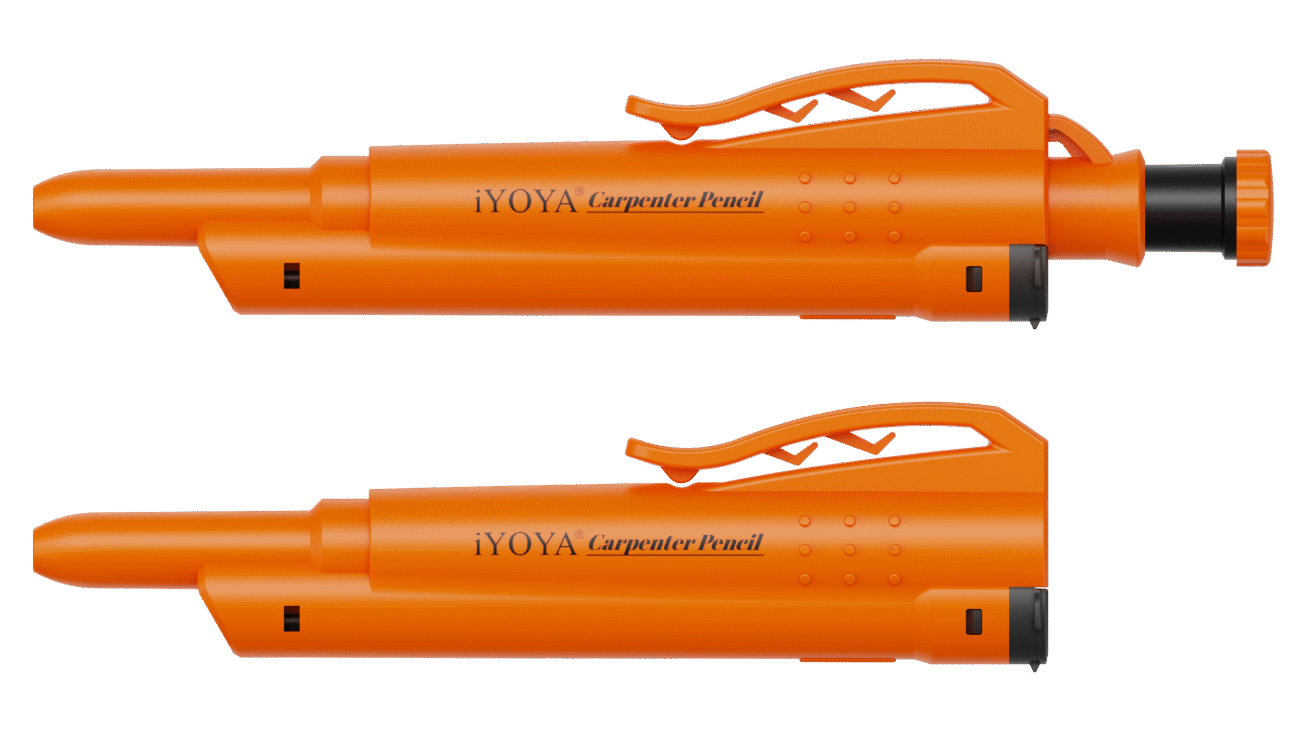
Most deep hole woodworking pencils use a mechanical advancement system — typically a push-button on the end or a twist mechanism — to extend the lead. This eliminates the need for sharpening and allows the user to control exactly how much lead is exposed for different marking depths.
The advancement mechanism should operate smoothly with one hand, so you can keep your other hand on the workpiece. A mechanism that requires two hands or jams frequently will slow you down on the job.
Specialized Lead Formulation
Because the lead is extended far from the support point, it experiences much more leverage than the lead in a standard pencil. Deep hole pencil lead is formulated to balance hardness and toughness — hard enough to hold a point and leave a clean mark, but not so brittle that it snaps when extended.
Lead diameter also matters. Thinner leads allow the tip to fit into smaller holes and tighter gaps, but they are more fragile. Thicker leads are stronger but may not fit into very narrow spaces. Quality deep hole pencils use a lead diameter that balances reach and durability.
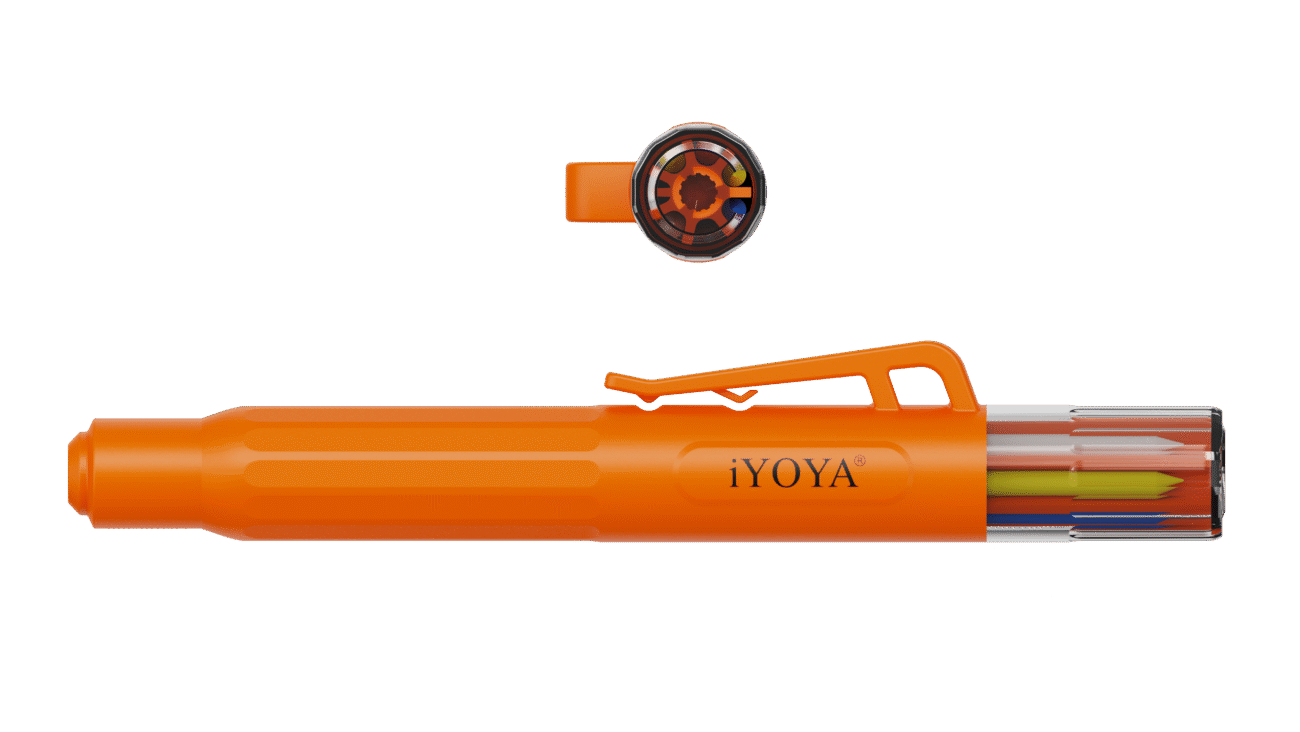
Many deep hole pencils are available with different lead colors — yellow, red, and white in addition to standard graphite — so you can choose a color that contrasts with the wood you are working on. Dark walnut, for example, shows yellow or white marks much better than graphite.
Body, Clip, and Grip Design
The body of a deep hole pencil is typically slimmer than a traditional carpenter pencil, allowing it to enter spaces where a wide flat body would not fit. A pocket clip keeps the pencil secure in a shirt pocket or tool belt loop. Some models include a grip zone with textured rubber or knurling for better control when marking in awkward positions.
A built-in sharpener or lead pointer is a useful feature on some models. While the lead does not need traditional sharpening, occasionally pointing the tip produces a finer, more precise mark.
What Is a Deep Hole Pencil Used For? Common Applications
Deep hole woodworking pencils are used whenever you need to make a mark on a surface that is recessed, enclosed, or otherwise difficult to reach. Here are the most common applications:
- Marking inside drilled holes — Transferring depth marks or center points to the inside wall or bottom of pre-drilled holes.
- Mortise and tenon layout — Marking the bottom and side walls of mortises to ensure tenons fit correctly.
- Dado and groove marking — Marking the bottom of dados, rabbets, and grooves for alignment and fit checks.
- Cabinet and furniture assembly — Marking inside cabinet carcasses, drawer boxes, and assembled frames where access is limited.
- Hinge and hardware installation — Marking screw hole positions inside hinge mortises and hardware recesses.
- Through-hole marking — Marking the exit side of through holes for dowels, bolts, or rods.
- Repair and restoration work — Marking inside existing furniture or structures that cannot be disassembled.
- Construction and framing — Marking inside wall cavities, joist hangers, and structural connections.
In each case, the deep hole pencil does something a regular pencil cannot: it puts a mark exactly where you need it, without requiring you to take apart the workpiece or guess at measurements.
Who Should Use a Deep Hole Woodworking Pencil?
A deep hole pencil is not necessary for every woodworking task. If you only build simple projects from flat boards and never work with joinery or drilled holes, a standard carpenter pencil may be sufficient. But the following users will find a deep hole pencil indispensable:
- Furniture makers — Regularly work with mortises, tenons, dados, and assembled joinery that requires internal marking.
- Cabinet makers and installers — Mark inside cabinet carcasses, drawer boxes, and installed cabinets during fitting and hardware installation.
- Finish carpenters — Handle trim, molding, and casing installation where marks must be made in tight, recessed spaces.
- Woodturners — Mark inside turned vessels, hollow forms, and deep recesses on the lathe.
- Contractors and remodelers — Work inside existing structures where disassembly is not an option.
- Serious DIY woodworkers — Build furniture or cabinets with joinery and want professional-level marking accuracy.
Even if you do not use it every day, a deep hole pencil is one of those tools that, once you need it, nothing else will do the job.
Benefits of Using a Deep Hole Pencil
Mark surfaces you cannot reach. This is the primary benefit. A deep hole pencil lets you mark inside drilled holes, mortises, grooves, and assembled structures that are inaccessible to regular pencils.
Improve accuracy and reduce errors. When you can mark directly on the target surface instead of measuring and transferring marks from the outside, you eliminate measurement transfer errors. This is especially critical for joinery where even a fraction of a millimeter matters.
Save time. Marking in place with a deep hole pencil is faster than disassembling workpieces, using makeshift extenders, or transferring measurements through multiple steps.
No sharpening required. The mechanical lead advancement means you never need a knife or sharpener. Just click or twist to expose fresh lead.
Reduce material waste. Accurate internal marking means fewer misaligned cuts, ill-fitting joints, and ruined workpieces. Over the course of a project, this can save significant material cost.
Versatile lead colors. Colored lead options allow you to choose a mark that contrasts with any wood species, from pale maple to dark walnut.
How to Use a Deep Hole Woodworking Pencil Properly
Using a deep hole pencil is straightforward, but a few techniques will help you get the best results and avoid breaking leads:
- Extend only as much lead as you need. The farther the lead extends, the more vulnerable it is to breaking. Extend just enough to reach the marking surface, not the maximum possible length.
- Use light, consistent pressure. Deep hole pencil marks do not require heavy pressure. A light, steady stroke produces a clean line and reduces lead breakage.
- Keep the lead perpendicular to the marking surface. Angling the lead too sharply can cause it to skip or snap. Hold the pencil so the lead contacts the surface at a moderate angle.
- Retract the lead when not in use. Protect the extended lead by retracting it before putting the pencil down or in your pocket.
- Use the right lead color for the wood. Graphite works well on light woods. Yellow, red, or white lead shows up better on dark or oily woods.
- Carry replacement leads. Deep hole pencil lead is a consumable. Keep a tube of replacement leads handy so you are not caught without a working pencil on the job.
iYOYA Deep Hole Woodworking Pencils
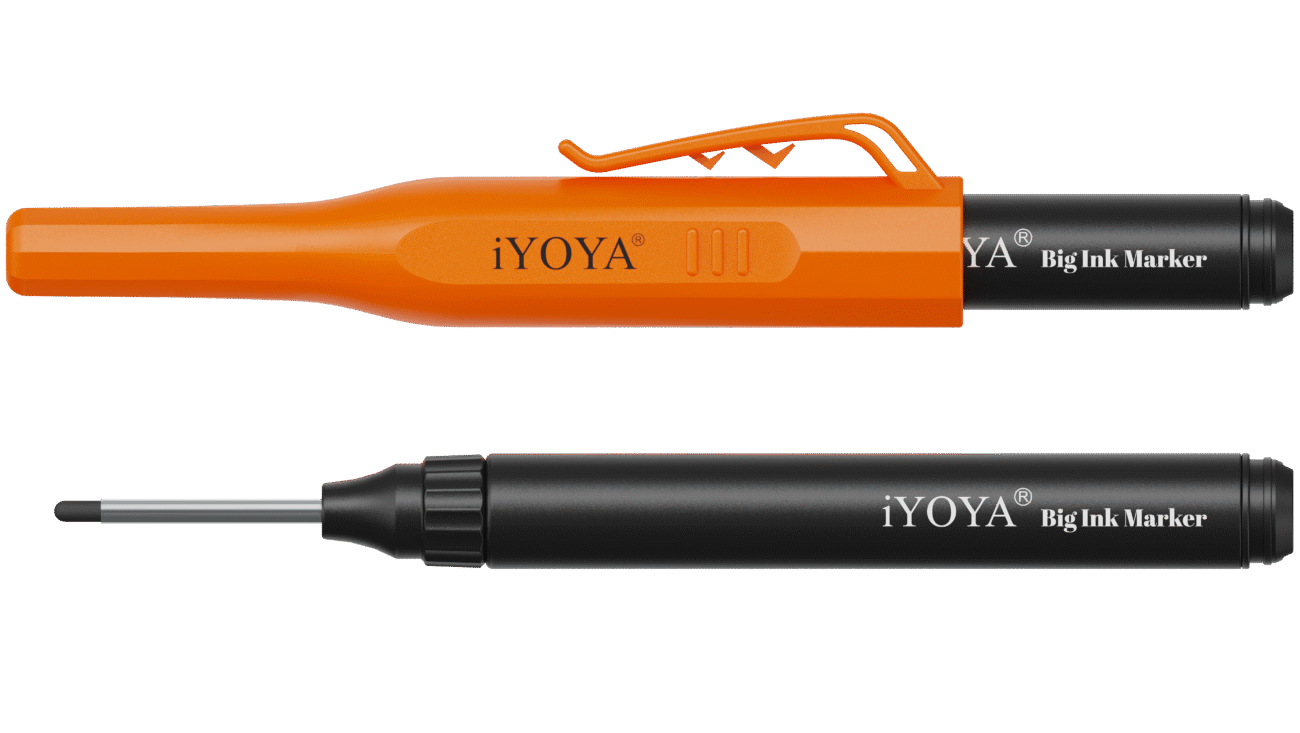
iYOYA designs and manufactures deep hole woodworking pencils built specifically for the demands of professional carpentry and fine woodworking. Rather than adapting a standard mechanical pencil design, iYOYA focuses on the extended-tip stability and lead durability that make deep hole marking reliable in real workshop conditions.
iYOYA deep hole woodworking pencils feature:
- Extended tip design for reaching recessed holes, mortises, and hard-to-access joinery
- Mechanical lead advancement for one-handed operation and no sharpening
- Durable lead formulation that resists breaking at extended lengths
- Slim body profile that fits into narrow gaps and tight spaces
- Available lead color options for different wood surfaces
- Replacement leads available for ongoing use
For a closer look at how deep hole pencils perform in actual woodworking tasks, see our guide on how to mark hard-to-reach wood areas. If you are comparing options, read deep hole pencil vs traditional carpenter pencil for a detailed breakdown. For B2B sourcing, visit our deep hole woodworking pencil manufacturer guide.
To learn more about iYOYA deep hole woodworking pencils or to request a sample, contact us.
FAQ
Q: What is a deep hole woodworking pencil used for? A: A deep hole woodworking pencil is used to mark inside drilled holes, mortises, grooves, recessed joints, and other hard-to-reach areas in woodworking and carpentry. Its extended tip reaches surfaces that a regular pencil cannot touch.
Q: Can a deep hole pencil replace a regular carpenter pencil? A: For many tasks, yes. A deep hole pencil can mark flat surfaces just like a regular pencil, plus it adds the ability to mark in deep and recessed areas. However, for very rough framing work where a thick, durable flat lead is preferred, some carpenters still keep a traditional carpenter pencil as well.
Q: How far can a deep hole pencil reach? A: The reach depends on the specific model and how far the lead is designed to extend. Quality deep hole pencils are engineered to maintain stability at their maximum extension. Always follow the manufacturer’s guidance and avoid extending the lead beyond its designed support length.
Q: Do deep hole pencils use special lead? A: Yes. Deep hole pencil lead is formulated to be strong and stable when extended far from the pencil body. It is typically a thinner diameter than standard carpenter pencil lead and may be available in multiple colors. Replacement leads are specific to the pencil model, so always use the manufacturer’s recommended lead.
Q: Is a deep hole pencil worth it for a DIY hobbyist? A: If your projects involve joinery, drilled holes, cabinetry, or furniture assembly, a deep hole pencil will make your marking more accurate and save you time. If you only do simple flat-board projects, it may not be a priority — but it is an affordable tool that you will appreciate when you encounter your first hard-to-reach marking task.
Q: How do you sharpen a deep hole pencil? A: You do not sharpen a deep hole pencil in the traditional sense. The mechanical advancement system exposes fresh lead as the tip wears down. Some models include a small lead pointer or sharpener to refine the tip for very fine marking, but regular sharpening with a knife or sharpener is not required.
Conclusion
A deep hole woodworking pencil is a specialized marking tool with an extended, mechanically advanced tip that allows carpenters and woodworkers to mark inside drilled holes, mortises, grooves, and other recessed areas that regular pencils cannot reach. It combines the marking accuracy of a fine pencil with the reach needed for complex joinery and assembled workpieces.
Whether you are a professional furniture maker, a cabinet installer, a finish carpenter, or a serious DIY woodworker, a deep hole pencil is a practical addition to your marking toolkit. It is one of those tools that seems unnecessary until you need it — and once you use it to mark inside a joint that nothing else can reach, you will wonder how you worked without it.
Explore iYOYA deep hole woodworking pencils to find a model suited to your woodworking needs, or get in touch for product information and samples.