



Why Are Carpenter Pencils Flat? What Is the Development History of This Essential Marking Tool in Woodworking?

The Secrets Beneath the Shavings: How Can a Carpenter Pencil Carve the Epic of Human Architecture?
When a master carpenter pulls a short, stout pencil from behind his ear and draws a critical reference line on the wood that determines success or failure, have you ever wondered that this tool in his hand is actually a “living fossil” that has traversed hundreds of years? It seems ordinary, yet its history is far more complex and legendary than we imagine.
Let us shave away the sawdust of history and explore the untold developmental epic behind that carpenter pencil.
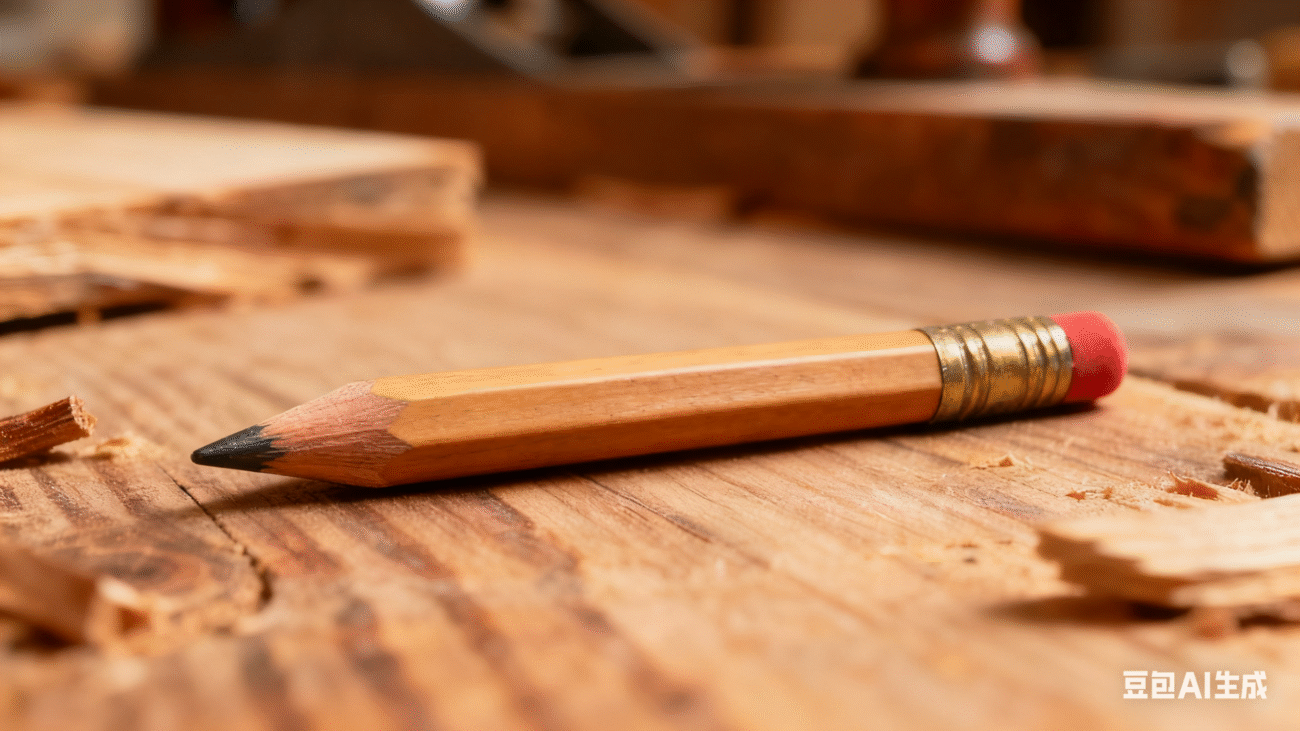
A “Black” Accident – The Suspenseful Origin of the Pencil
The story begins in the mid-16th century in Borrowdale, in the Lake District of England. A violent storm blew over a large tree, and shepherds discovered a black mineral beneath the roots—it was dark, greasy, and could leave clear marks on sheep. This was pure graphite.

But here lies the suspense: People at the time didn’t know what it was. Resembling lead, they called it “black lead.” They found that cutting this material into small strips and wrapping them with string or sheepskin allowed them to write and mark. This was the most primitive form of the pencil.
However, the Borrowdale graphite deposit was extremely pure, almost a “strategic resource” for England. It was so valuable that King George II had to step in, nationalize the mine, and enact laws to severely punish those who stole graphite. So, the question arose: Under the dual pressures of scarce resources and strict laws, how could this “black gold” be made available to ordinary craftsmen?
This suspense directly spurred the first major evolution of the carpenter pencil.
From “Noble” to “Craftsman” – The Birth and Standardization of the Pencil Barrel
The answer was: Give the pencil a “wooden coat.”
In 1795, the Frenchman Nicolas-Jacques Conté mixed graphite with clay and fired it to control the hardness of the pencil lead. This revolutionary invention not only solved the problem of pure graphite being too soft but also greatly conserved raw materials, enabling mass production of pencils. Around the same time, the American William Monroe established the first pencil factory in Massachusetts, achieving mechanized production of wooden pencil barrels.
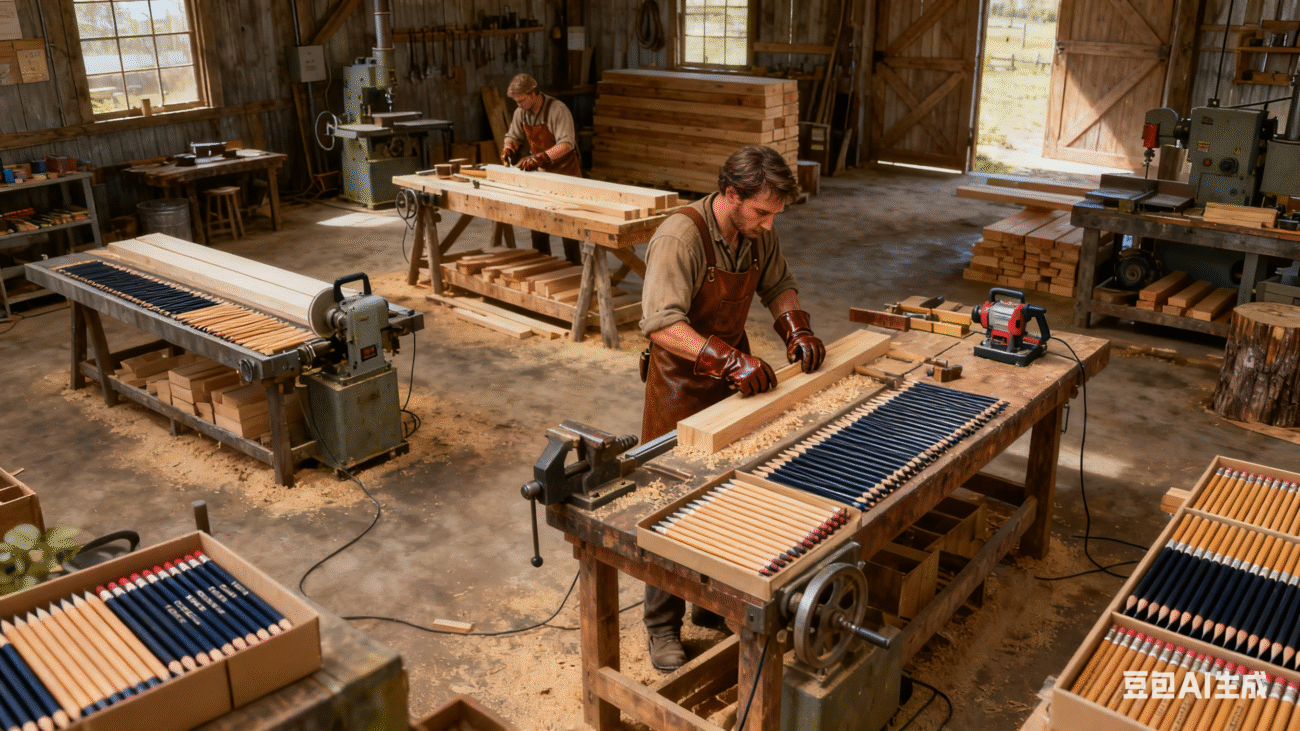
For the specific trade of woodworking, demand gave rise to unique designs:
Why is it flat? The primary purpose is to prevent the pencil from rolling off sloped workbenches. A simple design solving a big problem on the job site.
Why no sharp point? Carpenter pencils are often used to mark rough wood surfaces. A blunt or chisel-shaped point is less prone to breaking, and the broad lines it draws are easier to see.
Why is the lead so thick? To withstand repeated marking on wood and endure some pressure, carpenter pencil leads are typically thicker and sturdier.
From then on, the pencil was no longer just a stationery item for the study but truly became a tool for craftsmen to conquer wood. The carpenter pencil, as a unique branch of the pencil family, officially entered the stage of history.
The Color Code – The “Identity Revolution” of Carpenter Pencils
If you think carpenter pencils only come in black, you’re mistaken. The differentiation of colors was the second leap in the development history of carpenter pencils, a silent revolution in “trade language.”
Classic Black and Red: Early carpenter pencils mostly used black lead because it provided the clearest contrast on light-colored wood. Red or other brightly colored pencils were used for marking dark woods (like walnut) for the same purpose of visibility.
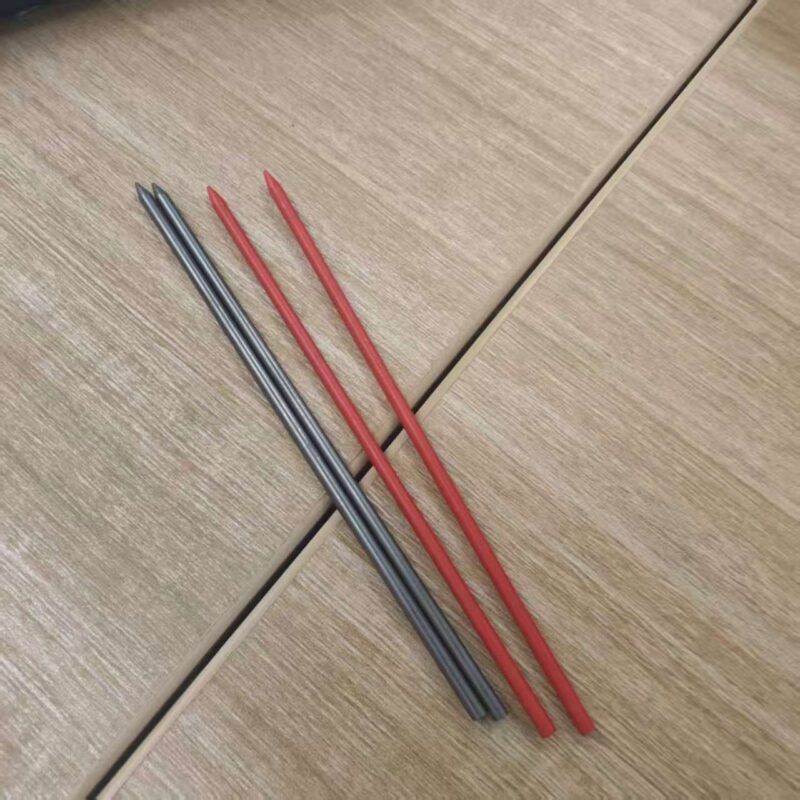
The subsequent birth of a glass lead core freed carpenter pencils from being limited to woodworking scenarios. Carpenter pencils could now mark on various materials such as rubber, glass, iron sheets, tiles, and cement. Correspondingly, for marking in some narrow gaps where traditional carpenter pencils couldn’t reach, deep-hole carpenter pencils were derived, allowing for marking and line drawing in deep holes. iYOYA has over 20 years of experience producing leads. The 2.8mm leads compatible with carpenter pencils offer smooth writing, are break-resistant, and allow for easy marking.
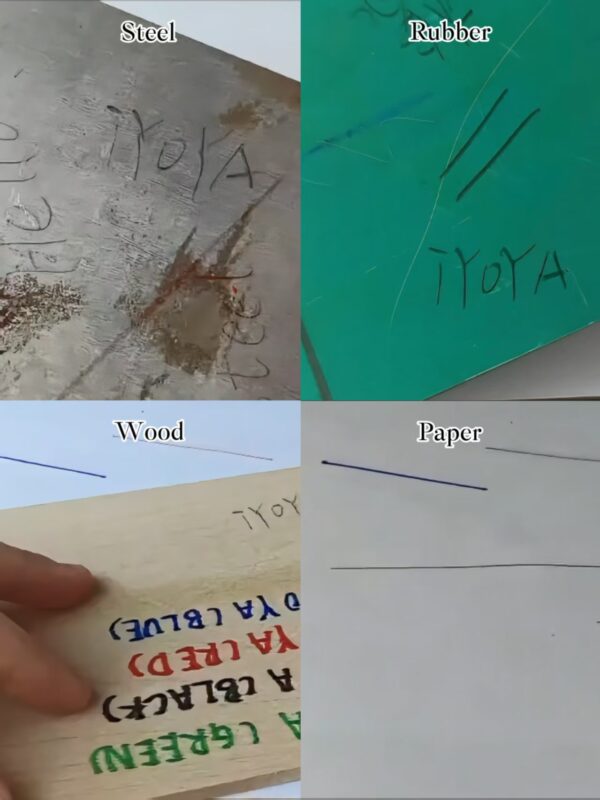
From black to colorful, and the birth of glass lead cores, the color of carpenter pencils is no longer just a matter of personal preference. It represents different process requirements and work stages, becoming a silent, precise dialogue among various craftsmen, and between craftsmen and materials.
Modern Refinement – Materials, Craftsmanship, and Infinite Future Possibilities
Entering the 20th century, carpenter pencils underwent deeper refinement.
Material Evolution: From expensive cedar wood to more eco-friendly recycled wood, plastic, and even metal barrels, the “body” of the carpenter pencil continuously innovated.
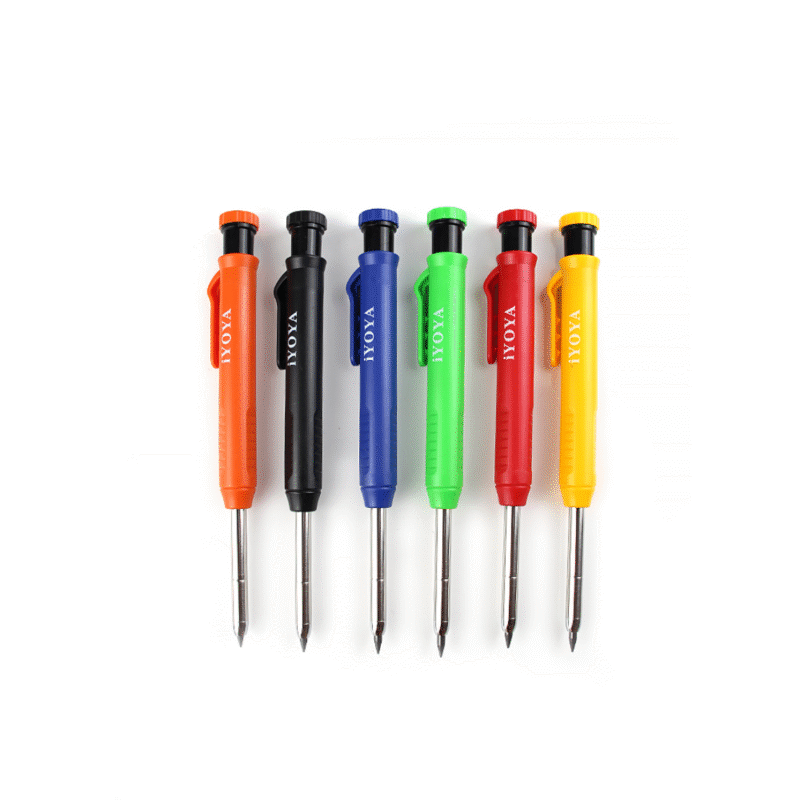
Craftsmanship Advancement: While whittling is classic, shaving-free, refillable mechanical carpenter pencils gained popularity, offering more choices for modern craftsmen seeking efficiency.
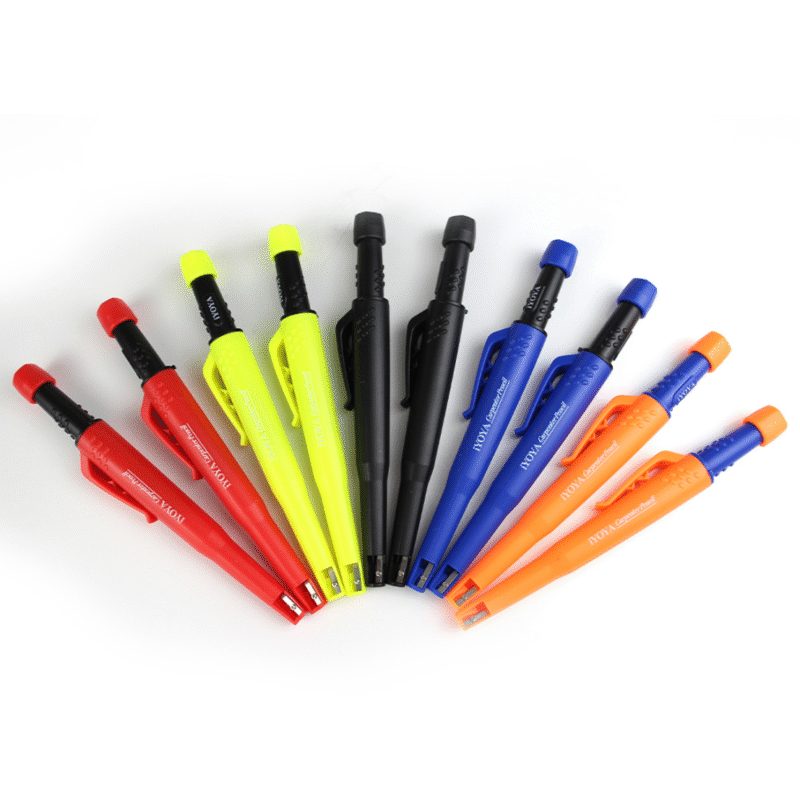
Integrated Functions: Today, a single carpenter pencil might integrate multiple functions like a level, ruler, screwdriver, etc., becoming a multi-tool.
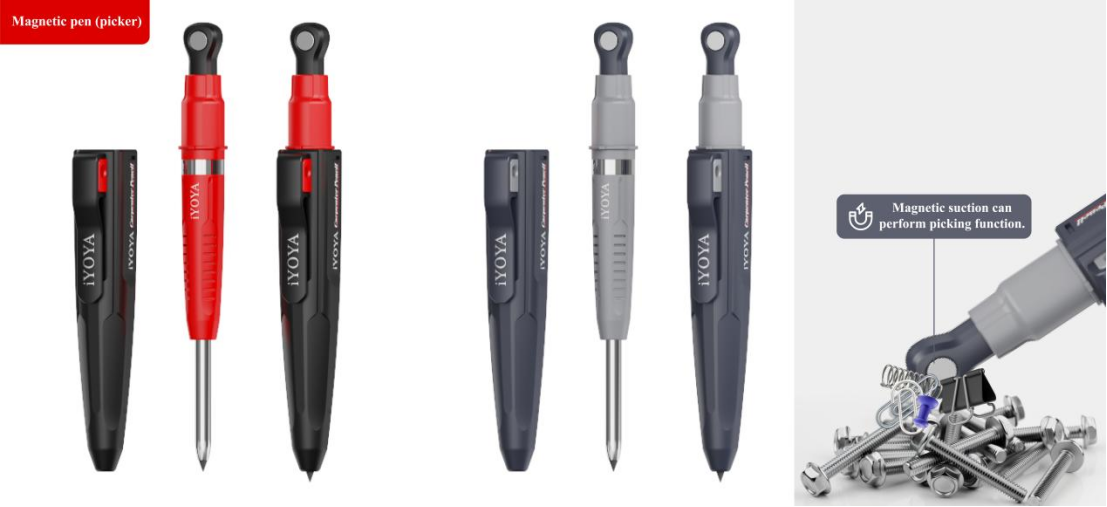
iYOYA is a professional manufacturer of carpenter pencils, consistently committed to product innovation and the development of new functions in the field of carpenter pencils. We not only support OEM and ODM but also mold development, customizing your exclusive appearance, exclusive functions, exclusive logo, etc. We can realize them all.
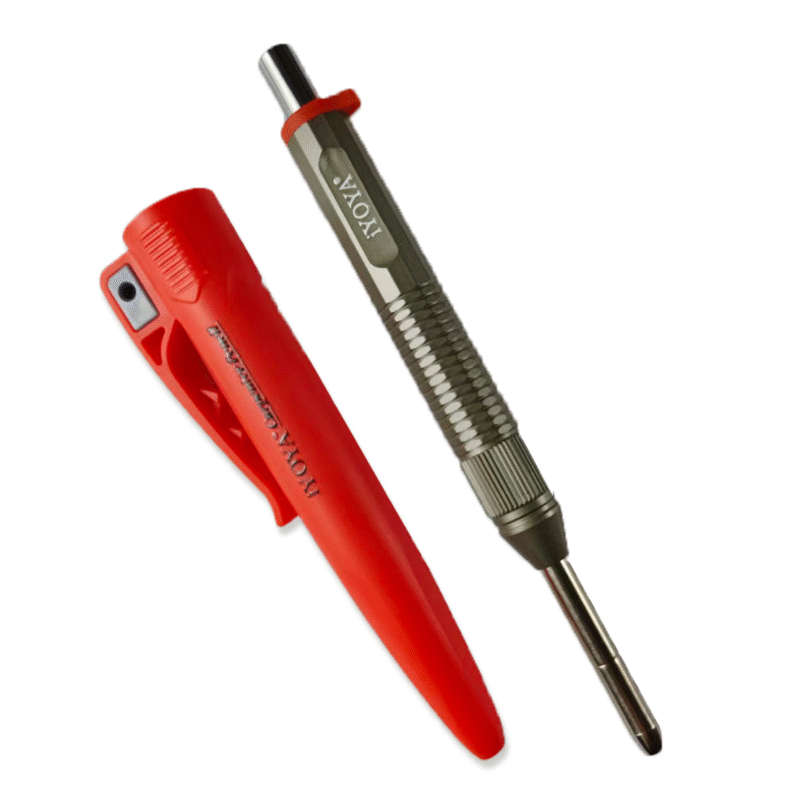
iYOYA has always been adding bricks and mortar to the development path of carpenter pencils, steadfastly walking the path of innovation. We will continue to develop and innovate more products, enabling tool users worldwide to mark with ease.
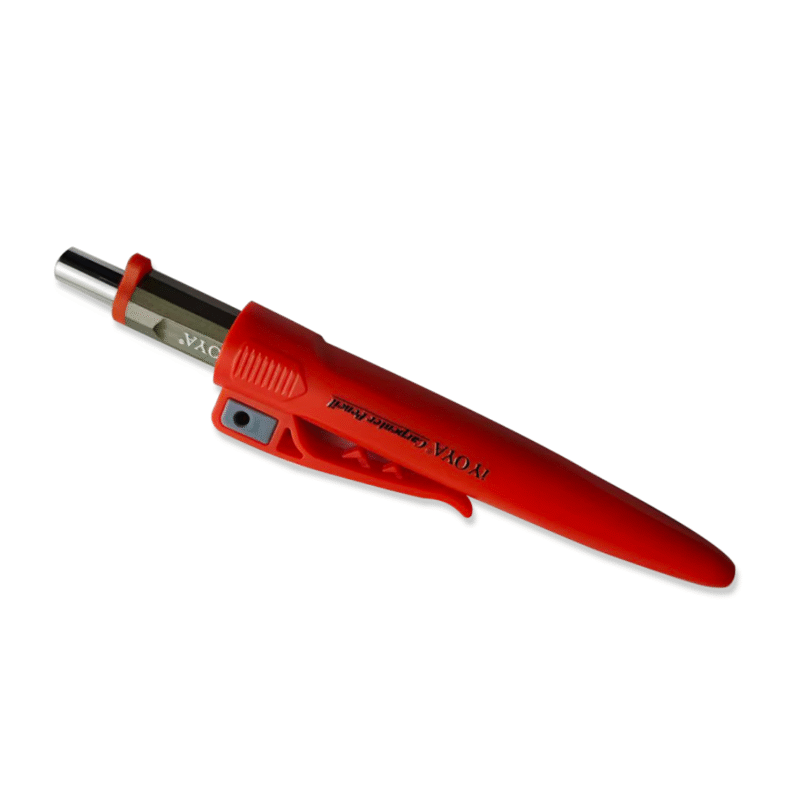
However, suspense arises again: As laser marking and digital projection technologies become increasingly prevalent today, will this ancient carpenter pencil meet its end?
The answer is likely no. Because it represents not just the function of marking, but also a tactile sense, an immediacy, an artisan intuition that cannot be replaced by digitalization. The moment the pencil glides across the wood, that real tactile feedback and sense of control is something no electronic device can provide.
Holding the Scepter That Carves Time
From the accidental discovery in the Borrowdale mine to the versatile tool in the hands of today’s craftsmen, the development history of the carpenter pencil is a miniature epic of human craft civilization. It has witnessed the entire journey from pure handcrafting to industrialization, and further to personalized customization.

Next time you see or pick up a carpenter pencil, take a closer look. Within its flat body, it carries storms, mineral deposits, wisdom, and centuries of craftsmanship heritage. It is not just a pencil but also a silent witness, an ancient companion always by the creator’s side. iYOYA will undoubtedly continue to innovate with more functions, more convenient, and faster marking tools.